Complete Guide to
Rhinoplasty Abroad
What you need to know before traveling abroad for rhinoplasty.

In this article
Essos is a US concierge whose medical board vets surgeons and clinics, so you can compare them and choose.
Every check in this guide works on any surgeon, whether or not you book with Essos.
What is rhinoplasty?
Rhinoplasty, or a nose job, is surgery that reshapes your nose. It is usually done for cosmetic reasons, and it can also help with some breathing problems. Your surgeon should plan it around your own face and goals, because you are the one who will judge it every day.[16]
Who is a good candidate for rhinoplasty?
You may be a good candidate if your face has finished growing, you don't have health problems that slow healing, and you have clear aesthetic goals for your nose. Essos works only with patients 18 and over.
If you smoke, stop at least 4 weeks before surgery, since quitting cuts complications by about 40% across surgery in general.[4]
What can rhinoplasty change, and what can't it?
Rhinoplasty can change or fix:
- A hump or dip on the bridge
- The shape of the tip
- The length or width of the nose
- The size and shape of the nostrils
- A nose bent by an injury
- Breathing problems[2]
Rhinoplasty can't guarantee an exact result, because the final shape depends on your nose's starting size and shape and on your age, so be wary of any surgeon who promises one.[1][2][20]
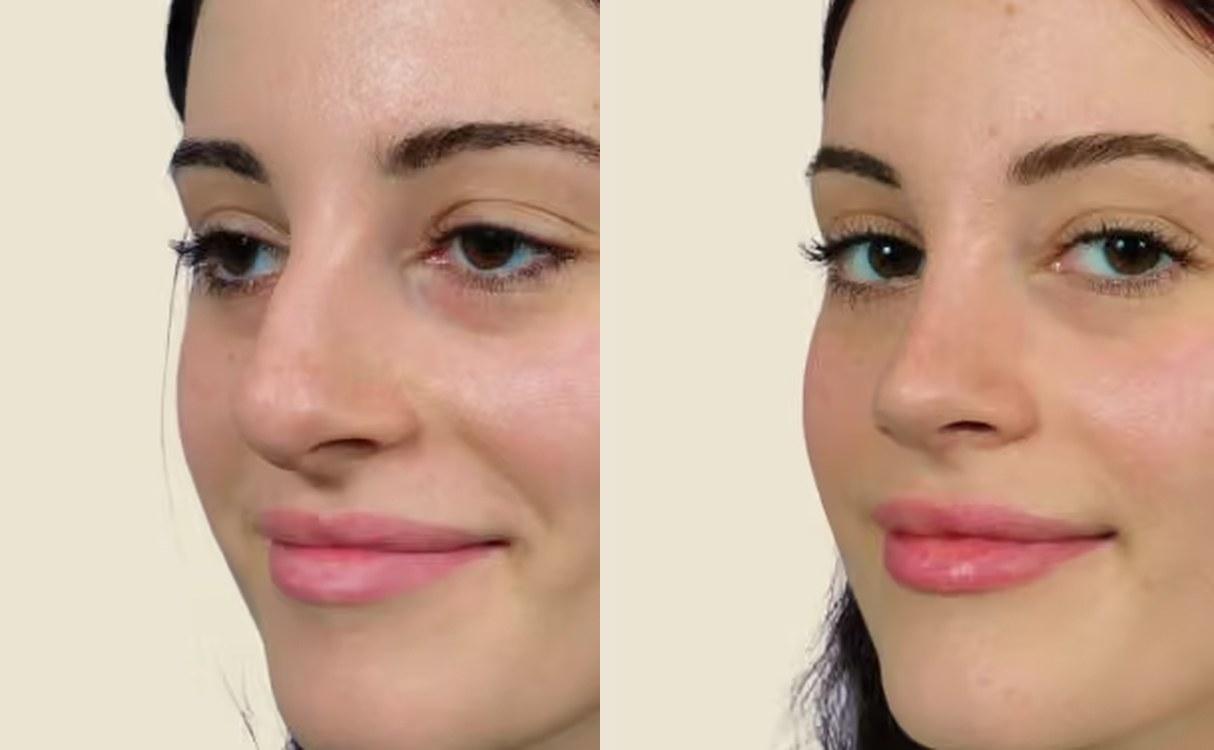
Francesca's story shows how she and her surgeon planned out her aesthetic goals to get the natural look she wanted, all before going to Turkey.
Types of noses: Roman, aquiline, Greek and button
You may hear four everyday names for nose shapes:
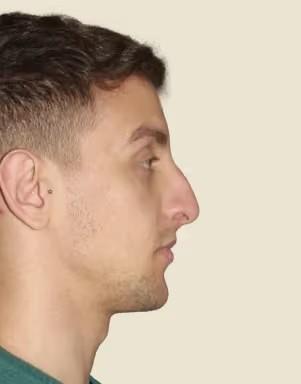
Roman nose
A bridge that curves out (surgeons call this a dorsal hump)
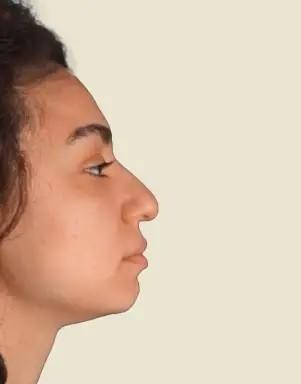
Aquiline nose
A thin nose with a curved bridge
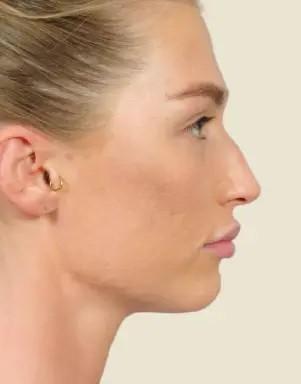
Greek (Grecian) nose
A straight bridge that continues the line of the forehead
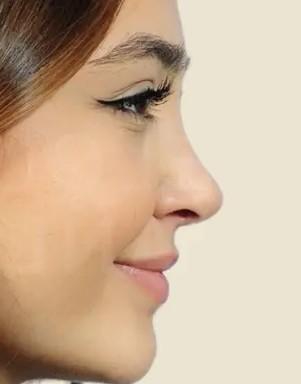
Button nose
A small, rounded nose
What are the different types of rhinoplasty?
Rhinoplasty is done open or closed, which differ in how the surgeon reaches the bone and cartilage under the skin. Open rhinoplasty adds one short cut across the strip of skin between your nostrils (columella), so the surgeon can lift the skin and see underneath directly.[2][6] Closed rhinoplasty uses cuts inside the nostrils only.
| Feature | Closed | Open |
|---|---|---|
| Typically for | Smaller changes, including many hump reductions | Bigger changes, like reshaping the tip, cartilage grafts, or revisions |
| Visible scar | None on the outside | A small scar under the nose, usually hard to notice once healed |
| Trade-offs | A more limited view, which can make precise changes harder | More swelling in some studies |
Your surgeon recommends the approach based on your nose and goals, and you may also hear the terms septorhinoplasty, preservation, ultrasonic, alar base reduction, ethnic and revision rhinoplasty:
Results vary with anatomy, skin, and healing.
Septoplasty and septorhinoplasty
Septoplasty straightens the septum, the wall inside your nose.
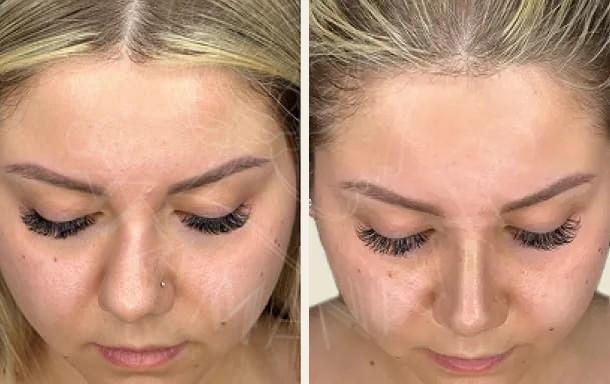
Before and after: a straighter, more centered nose.
Septoplasty straightens the septum, the cartilage and bone that divides your nose into two sides.
When the septum is bent (deviated), it narrows the airway on one side, making it harder to breathe. Most people breathe more freely once early swelling goes away.[7]
Septorhinoplasty is septoplasty and rhinoplasty done together, to address both cosmetic and functional needs.[8]
Preservation rhinoplasty
Preservation rhinoplasty aims to keep more of your nose's own structure.
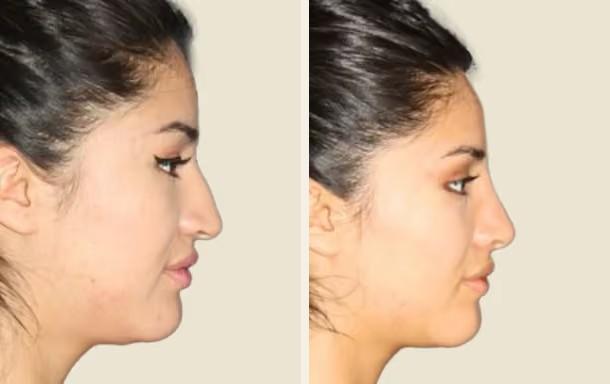
Before and after: bump on the bridge smoothed.
Preservation rhinoplasty is mostly used to flatten a hump on an otherwise straight nose. Surgeons often call it a "push-down," because the whole bridge is pushed down in one piece instead of the hump being cut off and rebuilt. It's an older method that has become popular again, and the hump can come back (in 1 to 15 in 100 people in studies), though the bridge tends to end up smoother.[9]
Ultrasonic (piezo) rhinoplasty
Piezo rhinoplasty reshapes the nasal bones with ultrasonic vibration.
Ultrasonic, or piezo, rhinoplasty uses ultrasonic vibration to cut and shape the nasal bones while sparing the soft tissue around them, which is useful when the bones need reshaping, such as narrowing a wide bridge.
Trials found less swelling and bruising in the first week than with a traditional chisel, although the evidence is still weak.[10]
Alarplasty (alar base reduction)
Alarplasty narrows a wide nostril base.
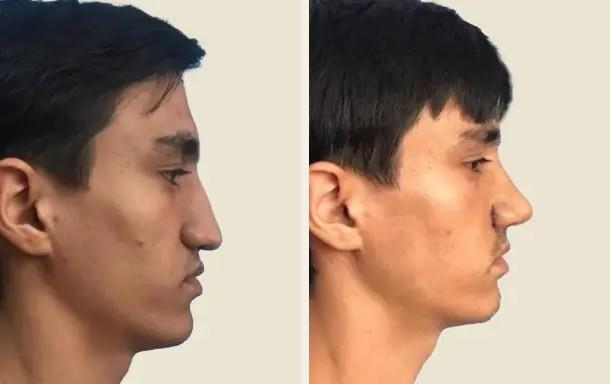
Before and after: tip lifted, nostril base narrowed, scar in the crease.
Alarplasty narrows a wide nostril base or reduces nostril flare by removing small wedges of skin.
When skin is removed on the outside of the nostril, the cut is placed along the natural crease where the nostril meets the cheek, so the scar follows that line and is usually hard to notice once fully healed.[11][20]
Ethnic rhinoplasty, and what many people call a "Korean nose job"
Ethnic rhinoplasty refines your nose while keeping it in proportion with your eyes, cheeks and lips, so it still looks balanced and natural.
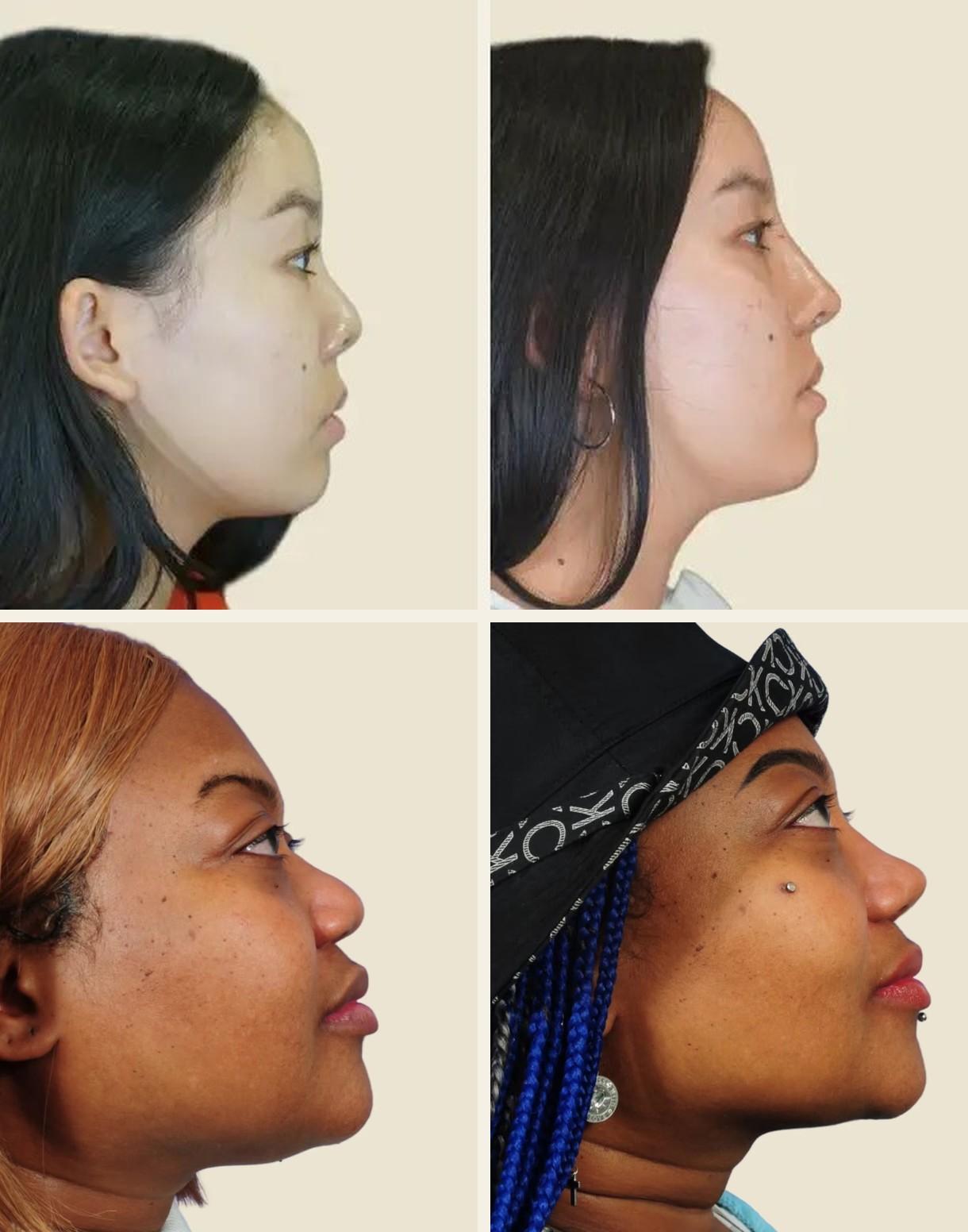
Before and after: two patients, each nose refined and still in proportion with her face.
Thicker skin, common in ethnic rhinoplasty, usually means a softer result and swelling that takes longer to settle.[12] Ask to see before-and-afters of patients who share your heritage, so you know what's realistic for your nose, and tell your surgeon which features feel most like you.
For East Asian patients, surgery usually centers on building up the bridge (dorsal augmentation) and shaping the tip, a combination many people call a "Korean nose job."[13]
Revision rhinoplasty
Revision rhinoplasty is a second operation to correct or adjust an earlier one.
Scar tissue, a nose already changed by the first surgery, and less remaining cartilage all make this procedure more complex. Surgeons often rebuild support with extra cartilage from elsewhere in the body, such as a rib, which is why a revision generally costs more than a first nose job, about 40% more on average for US patients.[14][35][38] The risks section covers how often revisions happen.
What happens before, during and after rhinoplasty?
Rhinoplasty starts with a consultation and a few weeks of preparation, then an operation of 1.5-3 hours. Most people are back at work or school within 1-2 weeks and start to feel like themselves again, while the final shape settles, typically over the course of a year.[2][5]
What happens at the consultation?
The surgeon starts by asking what you'd like to change and why, then gives you their honest view of what's achievable.[1] They'll examine the shape and proportions of your nose, check the inside for anything affecting your breathing, and take photos. Some turn the photos into a computer preview, which helps the conversation but isn't a promise of how your nose will heal.
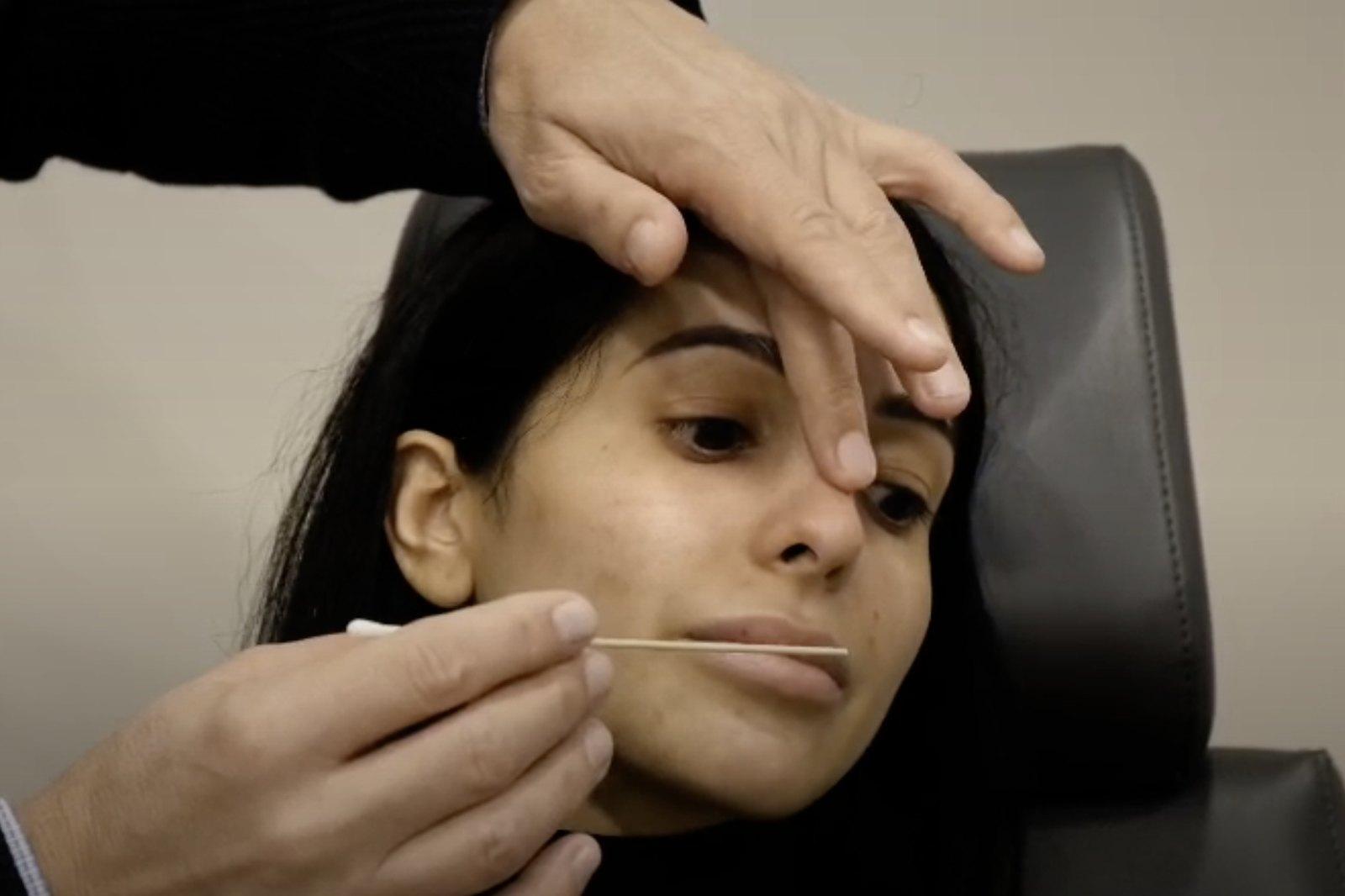
A surgeon in the Essos network examines a patient's nose during her consultation
Expect questions about your health too, including sleep apnea, bleeding disorders and long-term use of decongestant sprays, to make sure surgery is safe for you.
If your biggest question is whether you'll still look like yourself, bring photos of noses you like, and ones you don't, and tell your surgeon you want a natural result.
How do you prepare for rhinoplasty?
Before surgery, your surgeon will usually ask you to stop:
- Smoking: at least 4 weeks before[4]
- Aspirin and ibuprofen: 2 weeks before and 2 weeks after, because they can increase bleeding[2][16]
- Herbal supplements that can increase bleeding (tell your surgeon about every one you take)[36]
For travel-specific steps, see how to prepare for surgery abroad.
What happens on surgery day?
Rhinoplasty takes about 1.5-3 hours.[2][5] It's often done under general anesthesia, though some surgeons use local anesthesia with sedation, depending on how complex the operation is.[20]
You'll wake up with a small splint taped over your nose. Depending on where you have surgery and your health, you may go home later the same day or stay in the hospital for 1-2 nights.[5][20]
Plan for someone to stay with you at least the first night after surgery.[2] If you're traveling alone, ask whether you'll spend that night in the hospital or who will check on you at your hotel.
Rhinoplasty recovery week by week
Most of what you'll notice happens in the first 2 weeks, while the splint is on for about a week and the bruising fades.[1][5][20]
When should you call your surgeon?
Call your surgeon if your pain gets worse instead of better, or if you have a fever, bleeding that won't settle, or anything you didn't expect.[5][19][37]
If a nosebleed hasn't stopped after 30 minutes, go to the emergency room, and keep your surgeon's direct number with you.
Who looks after you once you're home?
The surgeon who operated on you should keep reviewing your progress by video or phone once you're home.[21] Before you travel, ask your own doctor whether they'll see you afterward for in-person checks or anything urgent. Ask the clinic for copies of your medical records in English to share with them.[22]
What are the risks of rhinoplasty?
Infection and bleeding are among the main complications after rhinoplasty, and both are uncommon. About 2-3 in 1,000 people need an unplanned return to the operating room within a month of surgery.[23]
A wound infection follows about 3 in 1,000 rhinoplasties and a pocket of blood under the skin (hematoma) about 2 in 1,000 in that time.[23] Traveling home adds some risk of its own, covered below.
What side effects are normal after rhinoplasty?
Swelling, bruising, a numb or stiff nose, congestion and a change in your sense of smell are common after rhinoplasty and usually fade with time. The recovery timeline above shows when most of them ease.[1][5]
What complications can rhinoplasty cause?
Less common complications include:
- Damage to the septum
- Heavy nosebleeds
- Difficulty breathing
- Numbness or a lasting change in smell
- Blood clots or allergic reactions to anesthetic[1][5]
Other complications affect the nose's appearance, such as asymmetry, abnormal scarring or a result that wasn't what you hoped for.[1][2]
Some smaller studies report infection or bleeding in up to about 4 in 100 people.[24]
If your bridge will be built up, ask your surgeon whether they'll use an implant or your own cartilage, and what the risks of each are for your specific case.
What is the revision rate for rhinoplasty?
About 3 in 100 people have a second operation, based on one large US study that followed patients for at least 3 years, and about 8 in 100 when the surgery was done for appearance.[25] Smaller studies report 5-15 in 100.[26]
Most second operations happen because the result didn't meet the patient's aesthetic or functional (breathing) goals, so talk through the chance of further surgery with your surgeon before you book.[1][14]
Does flying home add to the risk?
Traveling after any surgery adds to the risk of blood clots, but the starting risk after rhinoplasty is low.[27] A clot in the leg or lung follows about 2 in 10,000 cosmetic rhinoplasties within a month.[22][23]
On a long flight, take an aisle seat, walk when you can, flex your ankles and drink enough water. Ask your surgeon whether compression stockings suit you, and tell them if you've had a clot before or take birth control pills.[21][27]
Contact a doctor promptly for swelling, pain or unusual warmth in a leg, and get urgent help for unexplained shortness of breath or chest pain. The trip table shows when to fly.[27]
What lowers your risk?
You can lower your risk by:[1][19][21]
- choosing an experienced surgeon who is willing to show results on noses like yours
- finding a surgeon with the proper credentials in their country
- stopping smoking at least 4 weeks before surgery
- telling your surgeon about health conditions such as diabetes or sleep apnea
- following your aftercare instructions and keeping your follow-up appointments
- giving yourself enough time before you fly
Why do people get rhinoplasty abroad?
People travel abroad for care to pay less, for a procedure they can't get at home, or for a clinician who shares their language or culture.[22] The main differences from having rhinoplasty at home:
| At home (US) | Abroad | |
|---|---|---|
| Price | Usually higher | Usually lower; see the cost section below |
| Time away | Usually home the same day or next | Plan about 10 days to 2.5 weeks |
| Follow-up | In person with your surgeon | Video or phone, plus a doctor near home |
| If you need a second operation | Done nearby | May mean traveling back |
| Checking your surgeon | Board certification and state licenses are easy to look up | Rules vary by country, so plan more time to check your surgeon's training and results |
Wherever you go, the surgeon and your aftercare plan matter more than the destination.
Where do people travel for rhinoplasty?
Mexico and Turkey draw a large share of patients from abroad. Surgeons there estimate that about a third of their cosmetic patients come from other countries, roughly double the world average.[3]
From most US cities, the flight home takes about 2-6 hours from Mexico and about 10-15 hours from Turkey, and the length of that flight shapes how long to stay. You can read more about rhinoplasty in Mexico and rhinoplasty in Turkey.
Planning your trip: when to arrive, fly home and follow up
Plan about 10 days to 2.5 weeks in total, roughly in this order:
| When | What happens |
|---|---|
| At least 3 days before surgery | Arrive, rest after the flight, have pre-op tests and meet your surgeon in person |
| 7-10 days after surgery | Earliest point to fly home, once the splint is off; flying sooner adds to swelling and clot risk |
| Before you fly home | At least one check with the surgeon who operated, so any early problem is caught while you're still there |
| Once you're home | Video or phone follow-up with your surgeon; reviews at 1-2 weeks and 6 weeks to 6 months |
These timings may vary based on your specific surgery plan and surgeon.[5][21]
How do I choose a rhinoplasty surgeon abroad?
Check four things, in this order:
- Credentials: check with the official board in their country
- Results: recent, unedited before-and-afters of noses like yours
- Video call: with the surgeon, before you pay anything
- Price: what it includes, and who pays if you need a second operation
Board certification shows a surgeon's training, though it doesn't tell you how often they operate on noses. It's your face and your decision, so ask as many questions as you need, however small they seem, and a good surgeon will take the time to answer each one.[17][28]
How do you check a surgeon's credentials by country?
The right credentials differ by country, so look the surgeon up in the official listing below.[17]
| Country | What to check | Where to check |
|---|---|---|
| Turkey | TSPRAS membership, Turkish board certification, at least 5 years in practice and a fully recognized hospital with at least 30 beds[30] | Member search of TSPRAS, the Turkish plastic surgery society |
| Mexico | CMCPER certification renewed every 5 years and the specialist license (cédula de especialista)[31][32] | CMCPER directory (in Spanish) |
| US | Certification from the American Board of Plastic Surgery or the American Board of Otolaryngology (ENT)[2][33][34] | CertificationMatters.org or the plastic surgery board's Verify Certification page |
| Anywhere | An ISAPS member surgeon[17] | ISAPS Find a Surgeon |
What should you ask a rhinoplasty surgeon before booking?
- How many rhinoplasties have you done, and how often?
Listen for a real number, like how many they did last year.[28] Experience is essential, because rhinoplasty is one of the most technically demanding cosmetic surgeries, and while credentials matter, a surgeon's skill grows through constant practice. - Can I see before-and-after photos of noses like mine, and what result is realistic for me?
Surgeons tend to show their best results first, so ask for more photos taken at least a year after surgery.[2][34] - What does the price include, who pays for a revision, and who looks after me once I'm home?
Get all three in writing before you fly, so nothing comes as a surprise. - What malpractice (indemnity) coverage do you have, and does it apply to foreign patients?
This insurance pays for corrective surgery or compensation if something goes wrong. - Who gives the anesthesia, and what are their qualifications?
Listen for a trained anesthesiologist or nurse anesthetist who stays with you the whole time.
What are the red flags when booking rhinoplasty abroad?
Any of these is a reason to pause and ask more before you book:[1][29][30]
Before you pay
- Being asked to pay before you've met the surgeon.
- Pressure to book fast, such as a time-limited deal.
- A low headline price that doesn't list what it leaves out, like anesthesia, medication, or follow-up visits.
- Ads that promise a result before anyone has seen your nose.
- A plan to fly home too soon after surgery.
At the consultation
- Contact only through a coordinator or salesperson, with no direct, easy access to your surgeon.
- A surgeon who agrees to every change you want without discussing what suits your face or its limits.
- A consultation so short your questions don't get answered, or a surgeon you don't feel you can talk to.
- Every nose in their before-and-afters looks the same.
How much does rhinoplasty cost abroad?
Rhinoplasty with Essos starts at $3,750 in Turkey and $4,600 in Mexico, from Essos partner-clinic prices in October 2026. In the US it averages about $12,000.[35]
- TurkeyFrom ~$3,750 · Essos
- MexicoFrom ~$4,600 · Essos
- United States$5,000-$25,000
- United Kingdom$5,200-$9,100
Dashed line: US average $12,239
An Essos trip typically includes:
- Your surgeon's fee
- Anesthesia and hospital fees
- A night in the hospital
- Pre-op tests
- Transfers
- Nursing care
- A hotel stay in Turkey
- A post-op check before flying home
You see exactly what's included before you book, though the final price can vary with how complex your surgery is and any add-ons.
Not usually included in an Essos trip, so budget for:
- Flights
- Time off work
- Medication
- Follow-up visits at home
- Extra costs from complications
Most insurers don't cover surgery outside your home country.[17]
For a detailed country-by-country cost breakdown, see the Rhinoplasty Cost Comparison Guide, or read about rhinoplasty cost in Mexico.
Frequently asked questions
Is it safe to get a nose job abroad?
Rhinoplasty abroad can go well when you check the surgeon, the hospital and your aftercare plan before you book, and leave enough time to recover before you fly. Traveling does add some risk, mainly blood clots on the flight home. The CDC's travel health guide points to three checks: a surgeon certified in their specialty, an internationally accredited hospital and follow-up care arranged before you travel.[22]
Is it safe to get a nose job in Turkey?
Safety in Turkey comes down to the surgeon and hospital you choose, and you can check both before you book. UK and Turkish plastic surgery societies advise a TSPRAS member with a Turkish board certificate you can see, at least 5 years in practice, an aftercare plan and a fully recognized hospital.[30]
Is it safe to get a nose job in Mexico?
In Mexico, check two things online before you book: the surgeon's specialist license (cédula de especialista), which Mexican law requires, and a current certificate from their board, such as CMCPER for plastic surgeons. Look for an accredited hospital too, though accreditation can't promise a good result.[22][31][32]
How long is rhinoplasty recovery?
Most people are back at work or school within 1-2 weeks, and in one small US study, most everyday activities resumed after about 4 days. Strenuous exercise waits 4-6 weeks, and glasses stay off your nose for about 7-8 weeks after surgery. Wear SPF 30 on your nose outdoors, because strong sun can discolor healing skin.[1][5][16][18][20]
How long should I stay abroad, and when can I fly home?
Will I still look like myself after rhinoplasty?
This is one of the most common worries patients bring to Essos, and a careful surgeon takes it seriously. They ask what you'd like to keep as well as change, and plan for a natural result that doesn't look "done." Dr. Erez Dayan, Essos' Chief Medical Officer, explains that the pinched, scooped "nose job" look that reads as obviously surgical comes from outdated techniques, poor surgical planning or both. Modern rhinoplasty, especially structural approaches that use cartilage grafts to support and refine the nose, works with your natural anatomy and facial proportions. Ask what's realistic for your nose, and to see results on noses like yours.[1][2][34]
How do I get a natural-looking nose job?
Bring photos of noses you like, and ones you don't, to your consultation, and ask to see healed results on noses like yours. A surgeon who changes less, or uses preservation rhinoplasty to keep your natural bridge, is more likely to give you a result that still looks like you.
How long does swelling last, and when will I see my final results?
What if I don't like my nose at first?
It's normal not to love your nose at first, because it can look swollen and unfinished for months, and that gets easier as the swelling settles. Keep talking to your surgeon, and know that most specialists advise waiting at least a year before a revision. A small revision later doesn't necessarily mean the first surgery failed, because healing isn't perfectly predictable.[1][2][9][15]
Does rhinoplasty hurt?
Pain after rhinoplasty is usually minimal to moderate and seldom severe, easing within 36-72 hours, though your nose can stay tender for up to 3 months. Let yourself rest, with your head propped up on pillows. Call your surgeon if pain gets worse, isn't eased by your medicine or stays moderate to severe for more than 48 hours.[1][5][37]
Can rhinoplasty fix my breathing too?
What follow-up care do I need after rhinoplasty abroad?
Sources (38)
- 1.Ishii LE, Tollefson TT, Basura GJ, et al. 2017. Clinical Practice Guideline: Improving Nasal Form and Function after Rhinoplasty. Otolaryngol Head Neck Surg 156(2 suppl):S1-S30. https://doi.org/10.1177/0194599816683153
- 2.American Society of Plastic Surgeons (ASPS) n.d. Rhinoplasty patient guide: overview, candidates, preparation, recovery, results, risks and safety, questions to ask, cost. plasticsurgery.org, accessed Oct 8, 2026. https://www.plasticsurgery.org/cosmetic-procedures/rhinoplasty
- 3.International Society of Aesthetic Plastic Surgery (ISAPS) 2026. ISAPS International Survey on Aesthetic/Cosmetic Procedures Performed in 2025. isaps.org, released Sep 29, 2026, accessed Oct 8, 2026. https://www.isaps.org/media/ua4leneo/isaps-global-survey_2025.pdf
- 4.Mills E, Eyawo O, Lockhart I, et al. 2011. Smoking cessation reduces postoperative complications: a systematic review and meta-analysis. Am J Med 124(2):144-154.e8. https://doi.org/10.1016/j.amjmed.2010.09.013
- 5.NHS 2023. Nose reshaping (rhinoplasty). nhs.uk, last reviewed Sep 22, 2023, accessed Oct 8, 2026. https://www.nhs.uk/tests-and-treatments/cosmetic-procedures/cosmetic-surgery/nose-reshaping-rhinoplasty/
- 6.Abi Zeid Daou C, Jalkh RM, Semaan ZM, Daou AM. 2025. Outcomes of Open Versus Closed Rhinoplasty, a Systematic Review and Meta-analysis. Plast Reconstr Surg Glob Open 13(8):e7047. https://pmc.ncbi.nlm.nih.gov/articles/PMC12327578/
- 7.MedlinePlus, US National Library of Medicine 2025. Septoplasty. medlineplus.gov, reviewed Jan 29, 2025, accessed Oct 7, 2026. https://medlineplus.gov/ency/article/003012.htm
- 8.Alanzi O, Assiri H, Aldosari B, Alarfaj A. 2025. Evaluating Change in Quality of Life as Long-Term Outcome Measure Post Septorhinoplasty: A Systematic Review. Indian J Otolaryngol Head Neck Surg 77(8):3348-3369. https://pmc.ncbi.nlm.nih.gov/articles/PMC12297172/
- 9.Gucuk D, Knoedler L, Niederegger T, et al. 2026. Shaping the Future of Nasal Surgery: A Systematic Review of Preservation Rhinoplasty. Aesthetic Plast Surg 50(13):4962-4978. https://pmc.ncbi.nlm.nih.gov/articles/PMC13433595/
- 10.Khajuria A, Krzak AM, Reddy RK, Lai K, Wignakumar T, Rohrich RJ. 2022. Piezoelectric Osteotomy versus Conventional Osteotomy in Rhinoplasty: A Systematic Review and Meta-analysis. Plast Reconstr Surg Glob Open 10(11):e4673. https://pmc.ncbi.nlm.nih.gov/articles/PMC9699654/
- 11.Cerkes N. 2022. Alar Base Reduction: Nuances and Techniques. Clin Plast Surg 49(1):161-178. https://pubmed.ncbi.nlm.nih.gov/34782134/
- 12.Wigley C, Sutton J, Eynon-Lewis N, et al. 2025. Optimising rhinoplasty outcomes in patients with thick skin. JPRAS Open 45:260-270. https://pmc.ncbi.nlm.nih.gov/articles/PMC12275857/
- 13.Wan R, Weissman JP, Ullrich PJ, et al. 2023. The Utilization of Fresh Frozen Cartilage in Asian Rhinoplasty: A New Approach. Plast Reconstr Surg Glob Open 11(4):e4903. https://pmc.ncbi.nlm.nih.gov/articles/PMC10132705/
- 14.Hacker S, Pollock J, Gubisch W, Haack S. 2021. Differences between Primary and Revision Rhinoplasty: Indications, Techniques, Grafts, and Outcomes. Plast Reconstr Surg 148(3):532-541. https://pubmed.ncbi.nlm.nih.gov/34270514/
- 15.Yeniçeri A, Oğuz O, Çayönü M. 2024. A Questionnaire About Revision Rhinoplasty Among Surgeons. Turk J Ear Nose Throat 34(4):129-134. https://doi.org/10.26650/tr-ent.2024.1576541
- 16.Mayo Clinic Staff n.d. Rhinoplasty: About. mayoclinic.org, accessed Oct 2, 2026. https://www.mayoclinic.org/tests-procedures/rhinoplasty/about/pac-20384532
- 17.International Society of Aesthetic Plastic Surgery (ISAPS) n.d. Patient guide: Considering Your Procedure Abroad (Make a Plan; Finding a Surgeon Abroad), Choosing Your Surgeon, Fees and Insurance. isaps.org, accessed Oct 8, 2026. https://www.isaps.org/discover/patients-home/considering-your-procedure-abroad/make-a-plan/
- 18.Yamasaki A, Warinner C, Lindsay R. 2022. Patient Recovery and Satisfaction with Perioperative Care After Rhinoplasty. Facial Plast Surg Aesthet Med 24(4):282-288. https://doi.org/10.1089/fpsam.2021.0034
- 19.Royal Berkshire NHS Foundation Trust 2026. Advice following nasal surgery (septorhinoplasty). Patient leaflet, Oct 2026, accessed Nov 5, 2026. https://www.royalberkshire.nhs.uk/leaflets/nasal-surgery-septorhinoplasty-aftercare-advice
- 20.University of Iowa Health Care 2019. Nose surgery (rhinoplasty). uihc.org, last reviewed Mar 2019, accessed Oct 7, 2026. https://uihc.org/health-topics/nose-surgery-rhinoplasty
- 21.British Association of Aesthetic Plastic Surgeons (BAAPS) 2023. BAAPS Cosmetic Tourism Guidelines, v1. baaps.org.uk, Sep 2023, accessed Oct 8, 2026. https://baaps.org.uk/_userfiles/pages/files/baaps_cosmetic_tourism_guidelines_sept_23.pdf
- 22.Stoney RJ, Leidel L. 2025. Medical Tourism. CDC Yellow Book 2026: Health Information for International Travel, Centers for Disease Control and Prevention, accessed Oct 8, 2026. https://www.cdc.gov/yellow-book/hcp/health-care-abroad/medical-tourism.html
- 23.Sergesketter AR, Shammas RL, Geng Y, et al. 2023. Tracking Complications and Unplanned Healthcare Utilization in Aesthetic Surgery: An Analysis of 214,504 Patients Using the TOPS Database. Plast Reconstr Surg 151(6):1169-1178. https://pmc.ncbi.nlm.nih.gov/articles/PMC10790563/
- 24.Sharif-Askary B, Carlson AR, Van Noord MG, Marcus JR. 2020. Incidence of Postoperative Adverse Events after Rhinoplasty: A Systematic Review. Plast Reconstr Surg 145(3):669-684. https://pubmed.ncbi.nlm.nih.gov/32097305/
- 25.Spataro E, Piccirillo JF, Kallogjeri D, Branham GH, Desai SC. 2016. Revision Rates and Risk Factors of 175 842 Patients Undergoing Septorhinoplasty. JAMA Facial Plast Surg 18(3):212-219. https://pmc.ncbi.nlm.nih.gov/articles/PMC5600890/
- 26.Bouaoud J, Loustau M, Belloc JB. 2018. Functional and Aesthetic Factors Associated with Revision of Rhinoplasty. Plast Reconstr Surg Glob Open 6(9):e1884. https://pmc.ncbi.nlm.nih.gov/articles/PMC6191217/
- 27.Centers for Disease Control and Prevention (CDC) 2024. Understanding Your Risk for Blood Clots with Travel. cdc.gov, May 15, 2024, accessed Oct 8, 2026. https://www.cdc.gov/blood-clots/risk-factors/travel.html
- 28.American Board of Facial Plastic and Reconstructive Surgery (ABFPRS) n.d. Patient FAQs. abfprs.org, accessed Oct 7, 2026. https://www.abfprs.org/patient-faqs/
- 29.NHS 2022. Cosmetic surgery abroad. nhs.uk, last reviewed Dec 14, 2022, accessed Oct 7, 2026. https://www.nhs.uk/tests-and-treatments/cosmetic-procedures/advice/cosmetic-surgery-abroad/
- 30.BAAPS and TSPRAS 2023. Joint Statement from BAAPS and TSPRAS. baaps.org.uk, Jun 23, 2023, accessed Oct 7, 2026. https://baaps.org.uk/about/news/1877/joint_statement_from_the_baaps_the_british_association_of_aesthetic_plastic_surgeons_and_tspras_the_turkish_society_of_plastic_reconstructive_and_aesthetic_surgeons
- 31.Consejo Mexicano de Cirugía Plástica, Estética y Reconstructiva (CMCPER) n.d. Home page. cmcper.org, accessed Oct 7, 2026. https://cmcper.org/
- 32.Cámara de Diputados (Mexico) 2026. Ley General de Salud, Article 272 Bis (last amended Jan 15, 2026). diputados.gob.mx, accessed Oct 7, 2026. https://www.diputados.gob.mx/LeyesBiblio/pdf/LGS.pdf
- 33.American Board of Otolaryngology-Head and Neck Surgery (ABOHNS) n.d. What We Certify. abohns.org, accessed Oct 7, 2026. https://www.abohns.org/about-our-certifications/what-we-certify
- 34.American Society of Plastic Surgeons (ASPS) 2024. Can you trust before and after photos? plasticsurgery.org, Mar 1, 2024, accessed Oct 7, 2026. https://www.plasticsurgery.org/news/articles/can-you-trust-before-and-after-photos
- 35.Malcolm M. 2024. How Much Does Rhinoplasty Cost? RealSelf, updated May 16, 2024, accessed Oct 7, 2026. https://www.realself.com/surgical/rhinoplasty/cost
- 36.American Society of Anesthesiologists 2015. Herbal and Dietary Supplements and Anesthesia (patient brochure). asahq.org, accessed Oct 12, 2026. https://www.asahq.org/~/media/sites/asahq/files/public/resources/patient-brochures/asa_supplements-anesthesia_final.pdf
- 37.American Academy of Otolaryngology-Head and Neck Surgery Foundation n.d. FAQs: Rhinoplasty Patient Pain Management and Discomfort. enthealth.org, accessed Oct 14, 2026. https://www.enthealth.org/be_ent_smart/faqs-rhinoplasty-patient-pain-management-and-discomfort/
- 38.Orofino E. 2024. How Much Does Revision Rhinoplasty Cost? RealSelf, updated July 31, 2024, accessed Oct 26, 2026. https://www.realself.com/surgical/revision-rhinoplasty/cost
This guide is for information only and is not medical advice. Talk with a qualified surgeon about your own situation.
The details matter. We're here to clarify them.
We make it simple to discover, book, and finance cosmetic surgery, hair transplants, and other aesthetic procedures at vetted clinics worldwide — all in one seamless experience.
Every clinic on Essos is reviewed by our Medical Board of 30+ board-certified surgeons, led by our Chief Medical Officer, Dr. Erez Dayan (formerly Chief Resident in Plastic & Reconstructive Surgery at Massachusetts General Hospital/Harvard Medical School). With flexible financing options, Essos gives you global access with complete peace of mind.
- Discover — Explore our handpicked network of world-class, board-vetted clinics worldwide.
- Consult — Connect directly with your chosen clinic's medical team for personalized guidance.
- Book — Secure your procedure date with clear, upfront pricing and no hidden fees.
- Finance — Spread costs with flexible payment plans designed to beat traditional medical financing.
- Trust & Safety — Every clinic is vetted by our independent Medical Board of 30+ board-certified surgeons.
- Upfront Pricing — Transparent, all-inclusive costs. No hidden fees, no surprises.
- Concierge Care — 24/7 personal support before, during, and after your procedure.
- Smarter Financing — Flexible payment plans with better terms than traditional medical lenders.
- All-in-One Platform — From discovery to recovery, everything managed seamlessly in one place.
We verify credentials, inspect facilities, review patient outcomes, and ensure each clinic meets international accreditation standards, so you never have to second-guess your choice.
On average, Essos procedures cost up to 80% less than the same treatments in the U.S.
From there, your dedicated concierge will guide you step by step — answering questions, arranging details, and supporting you throughout the entire process.
